
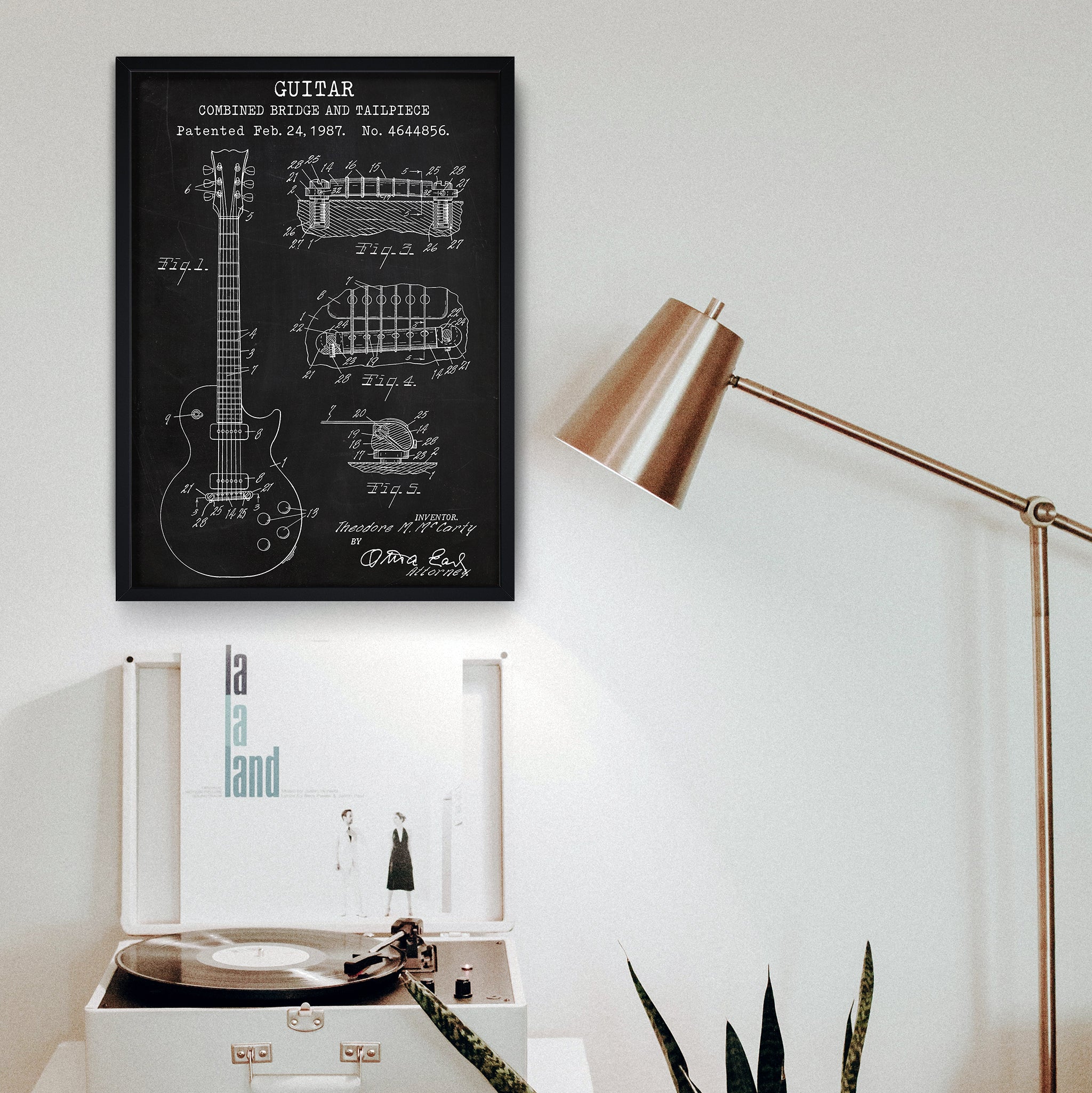
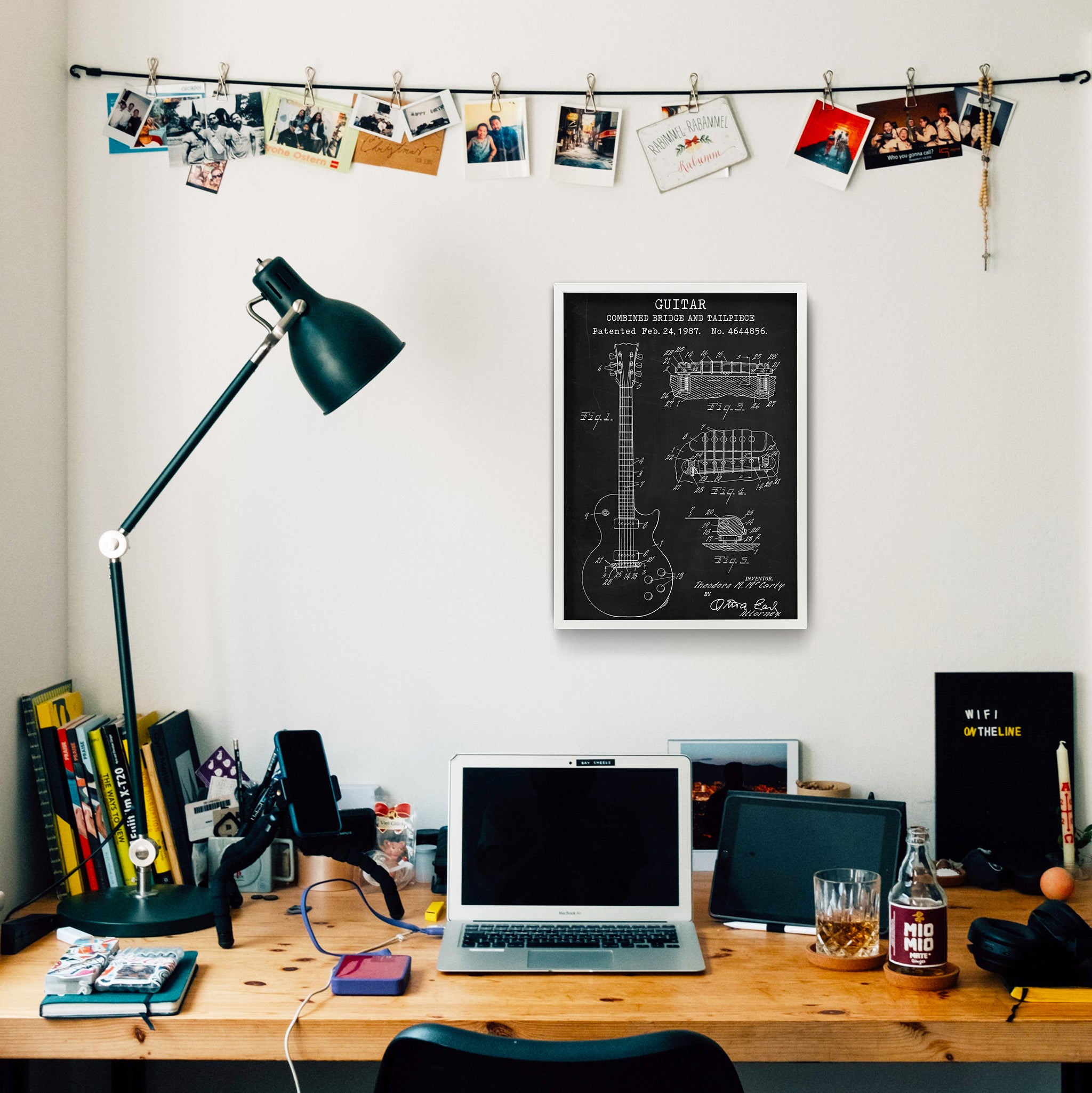
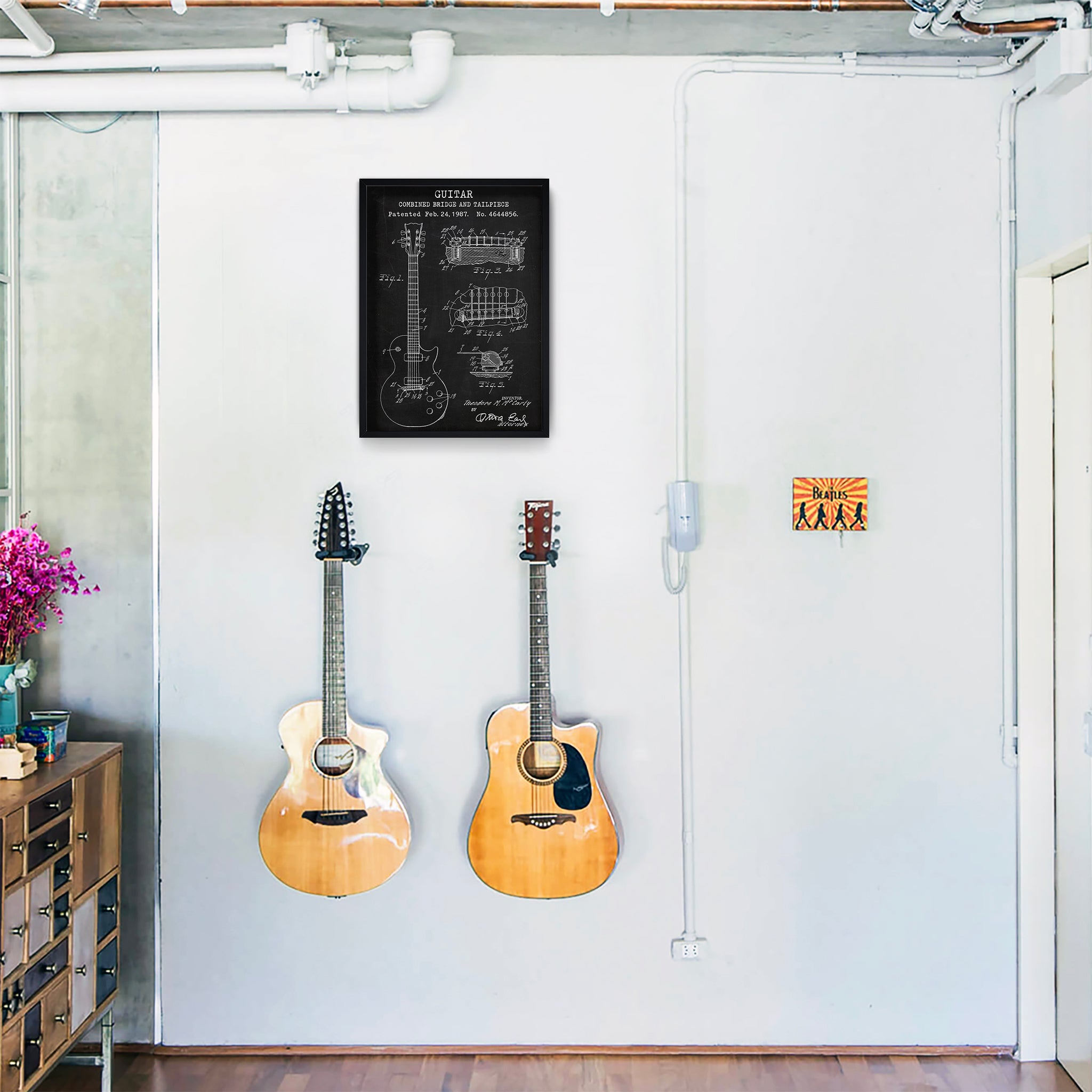
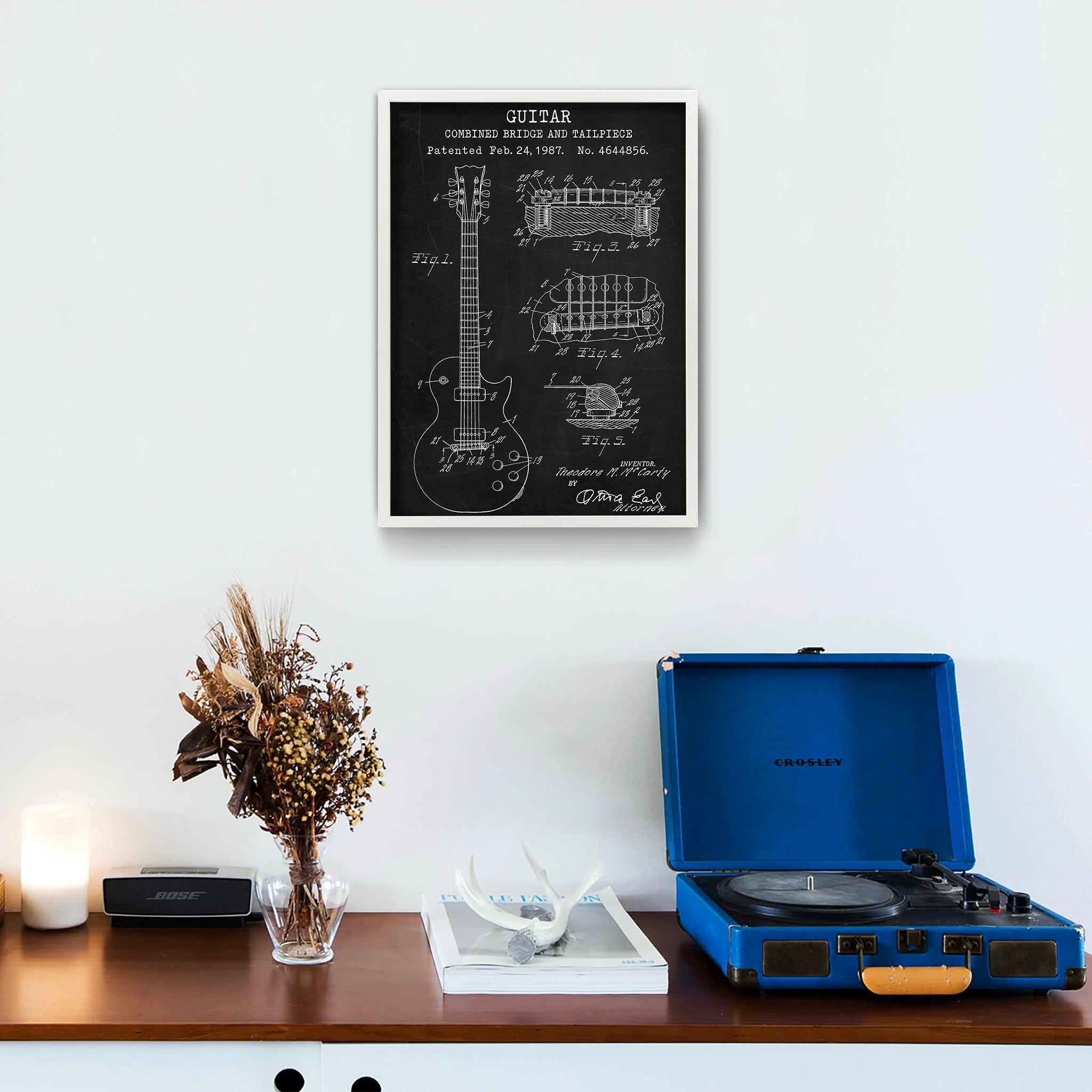
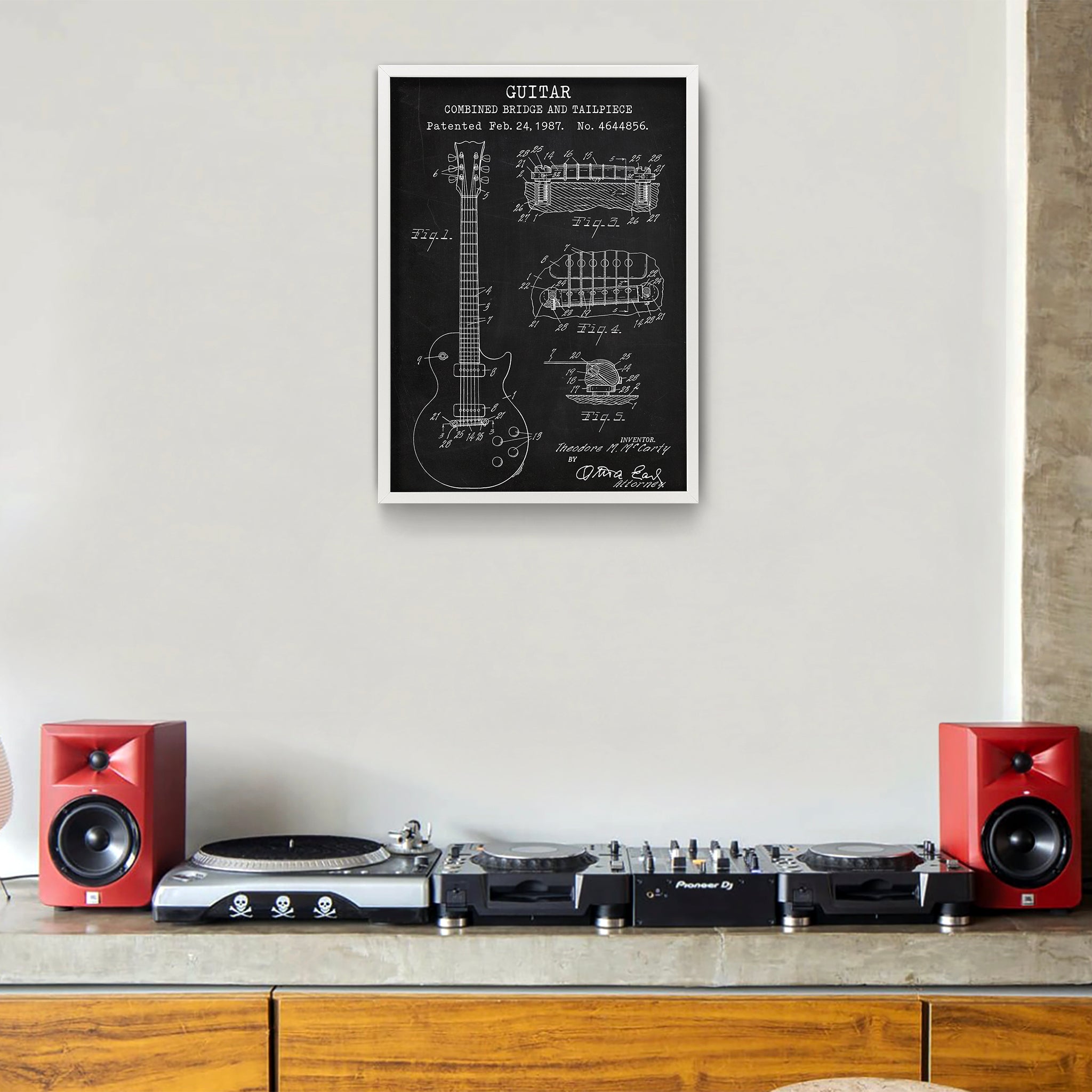
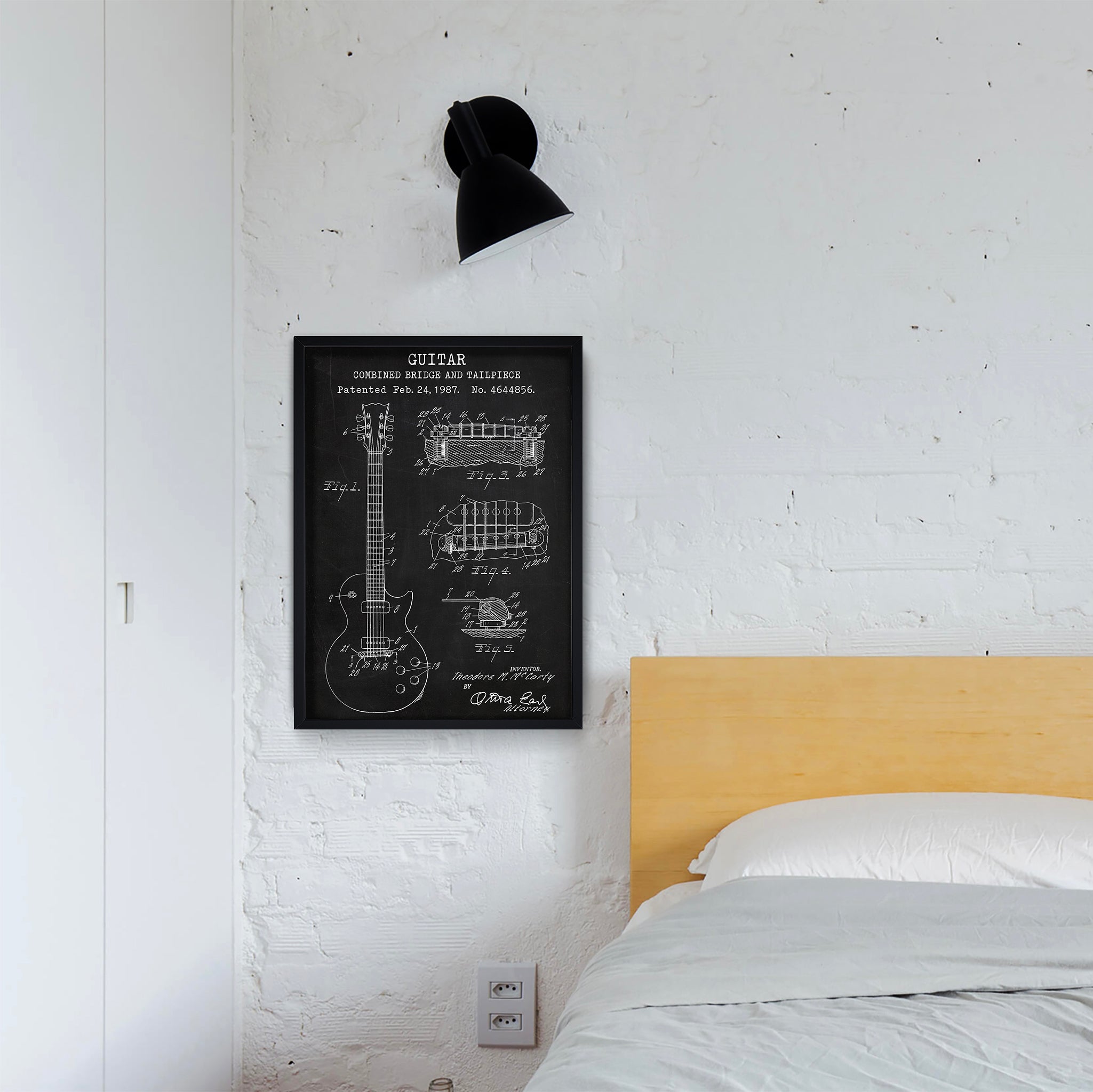
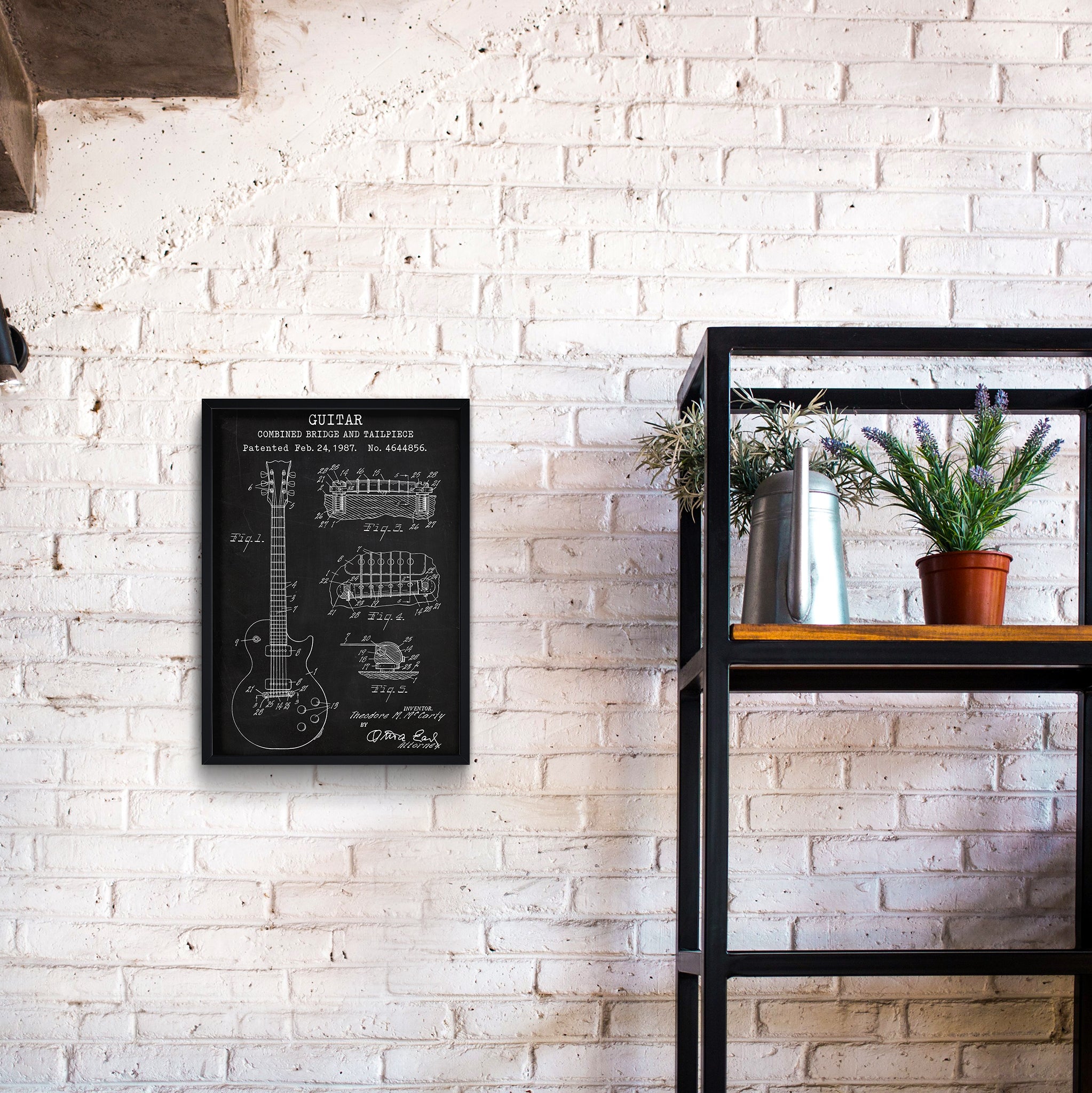
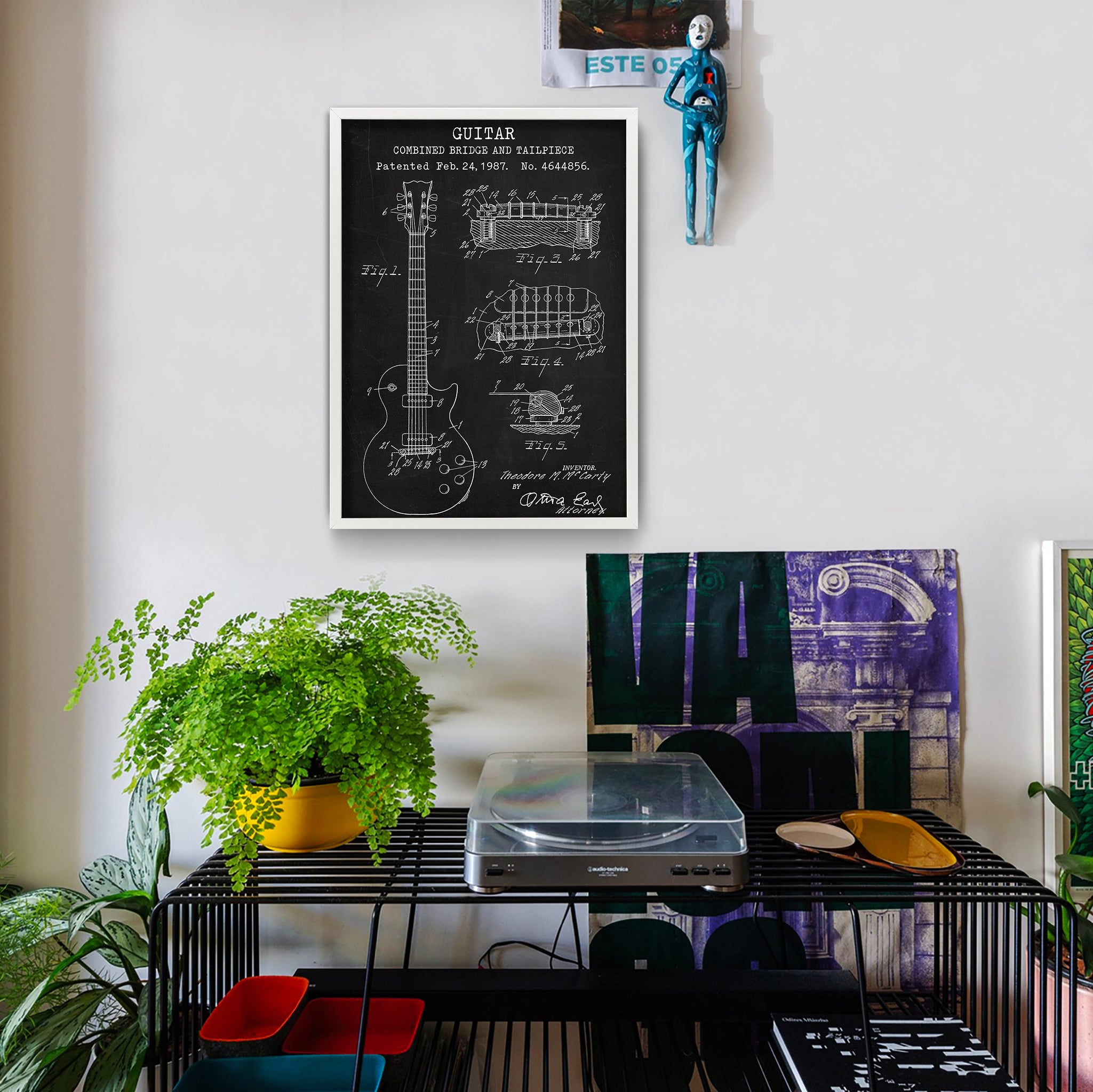
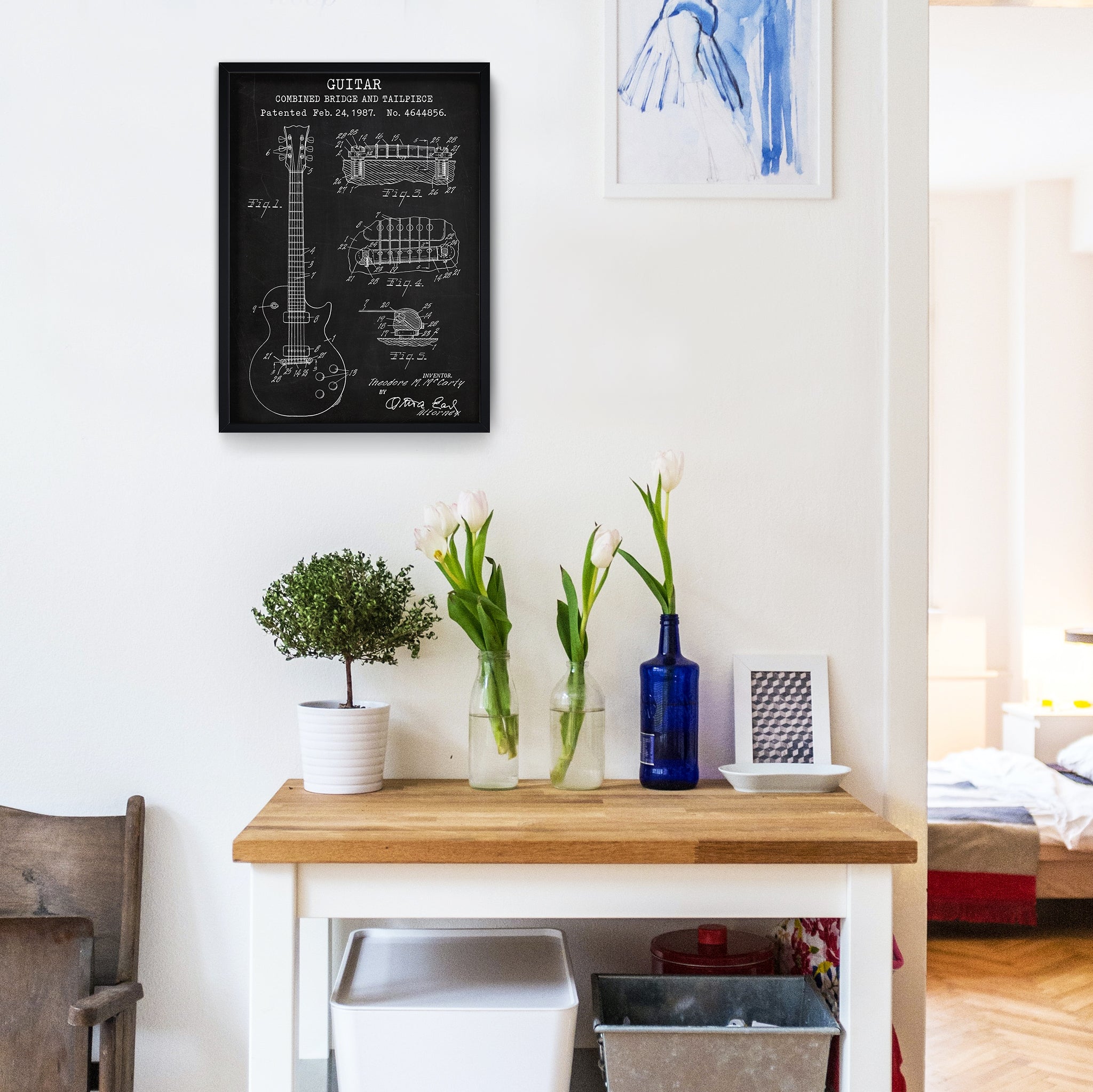
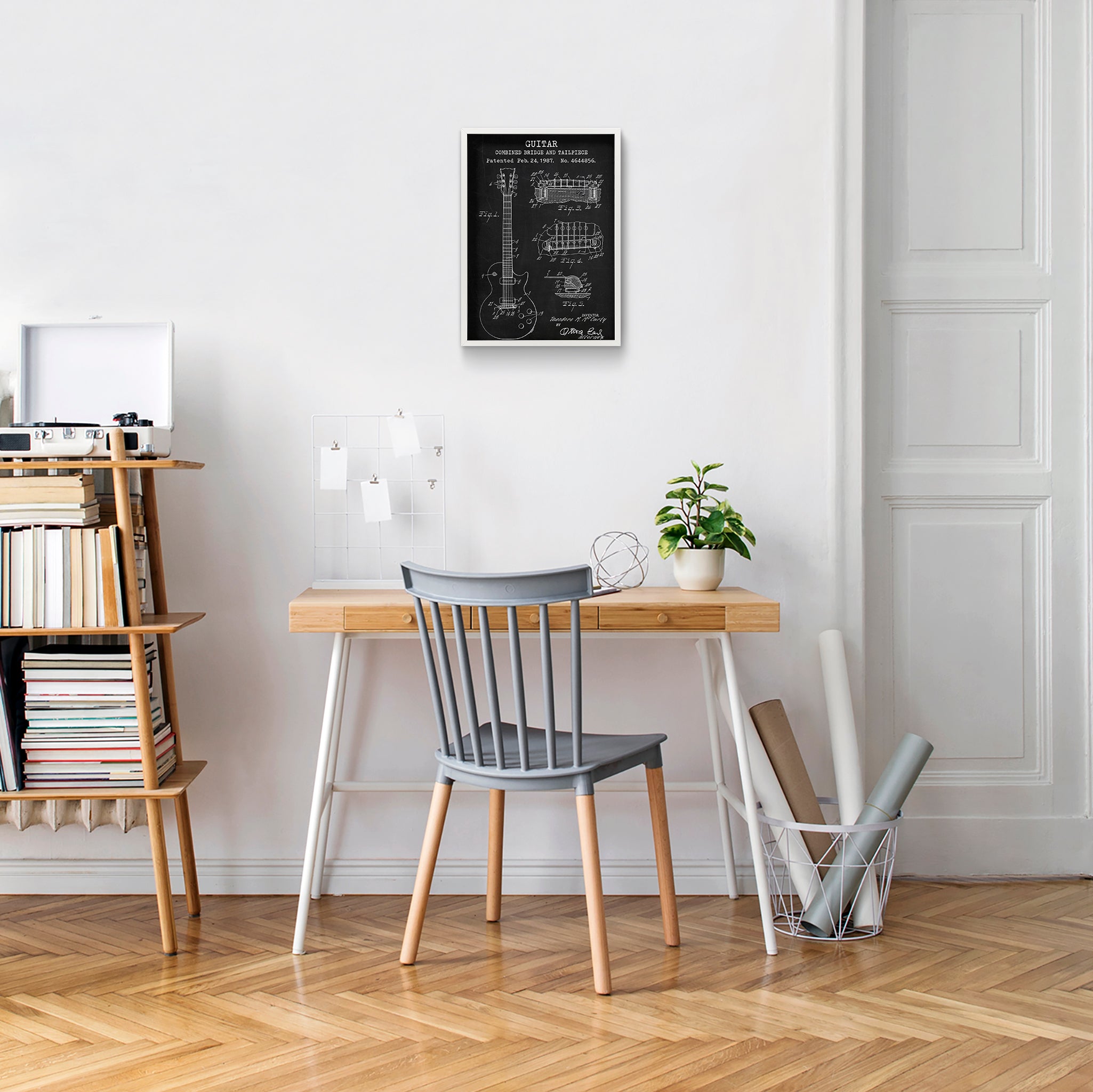
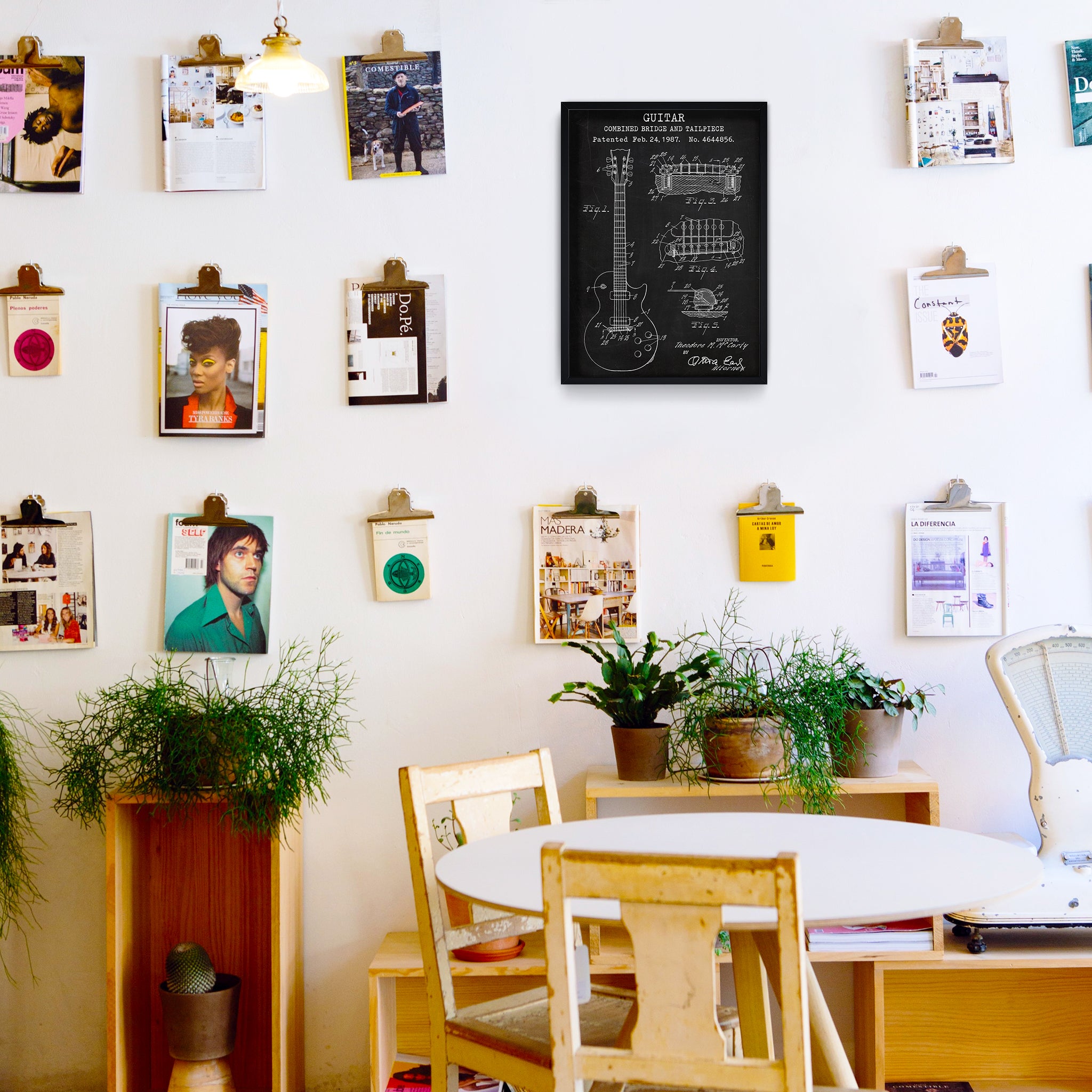
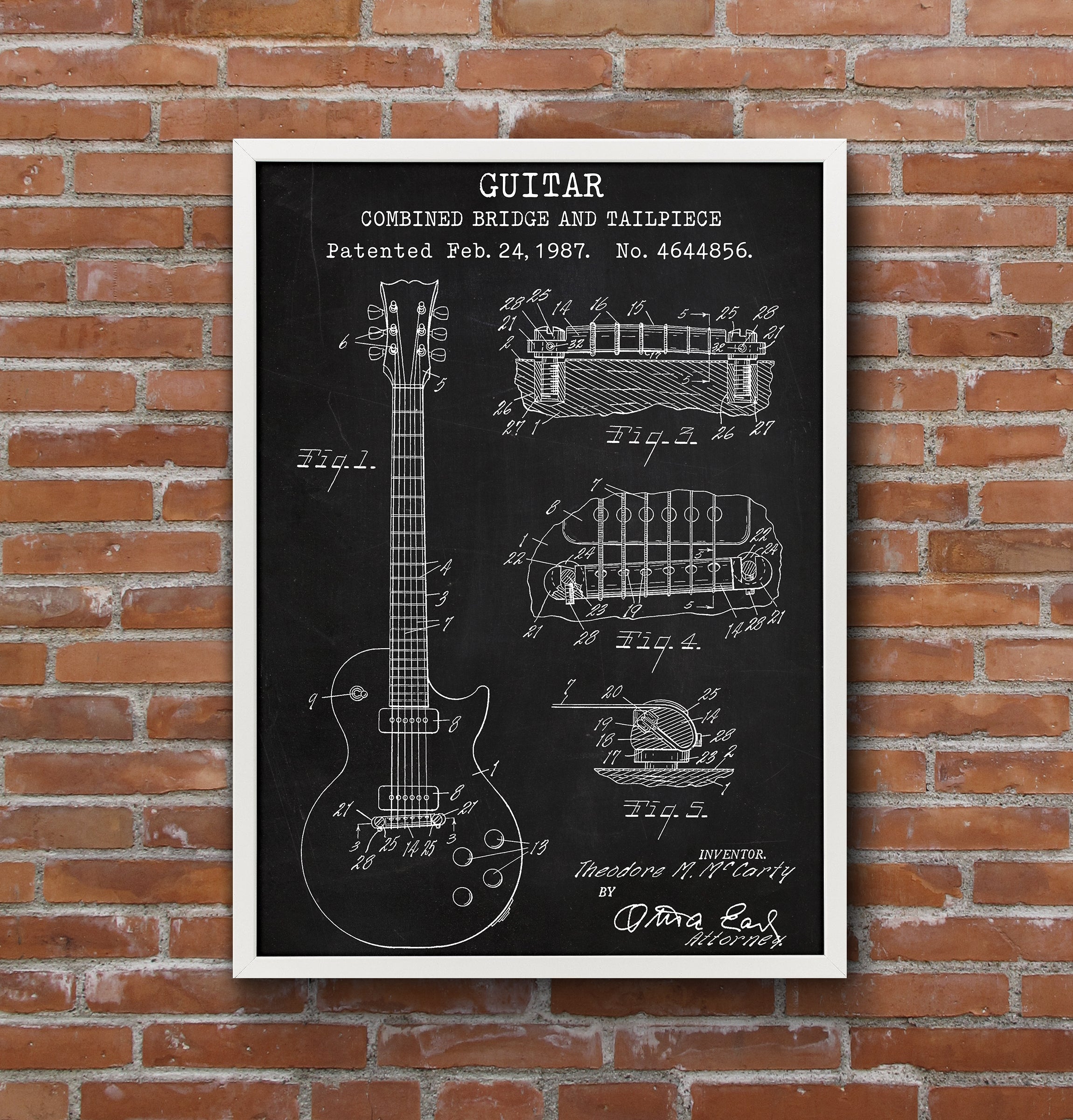
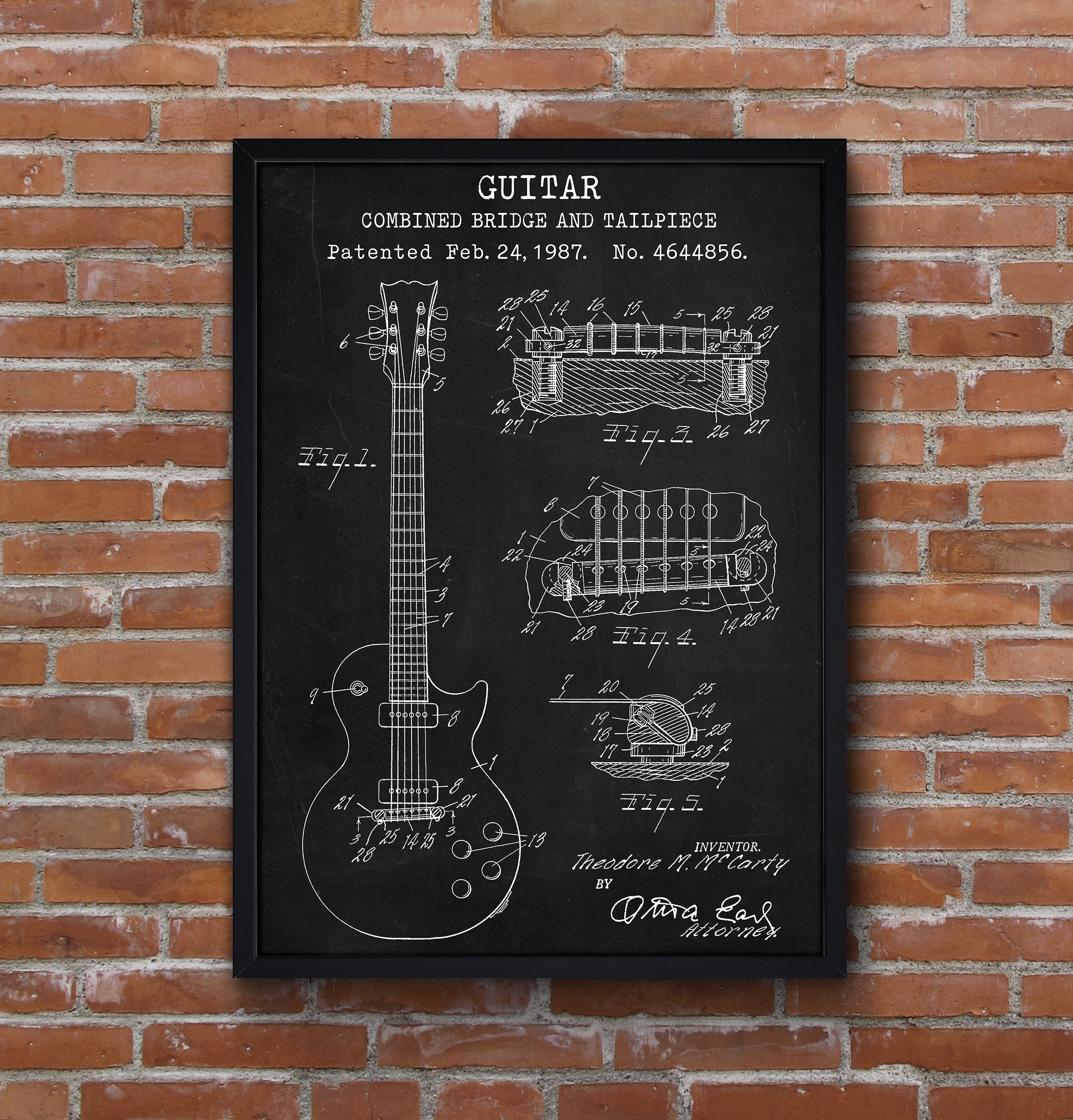
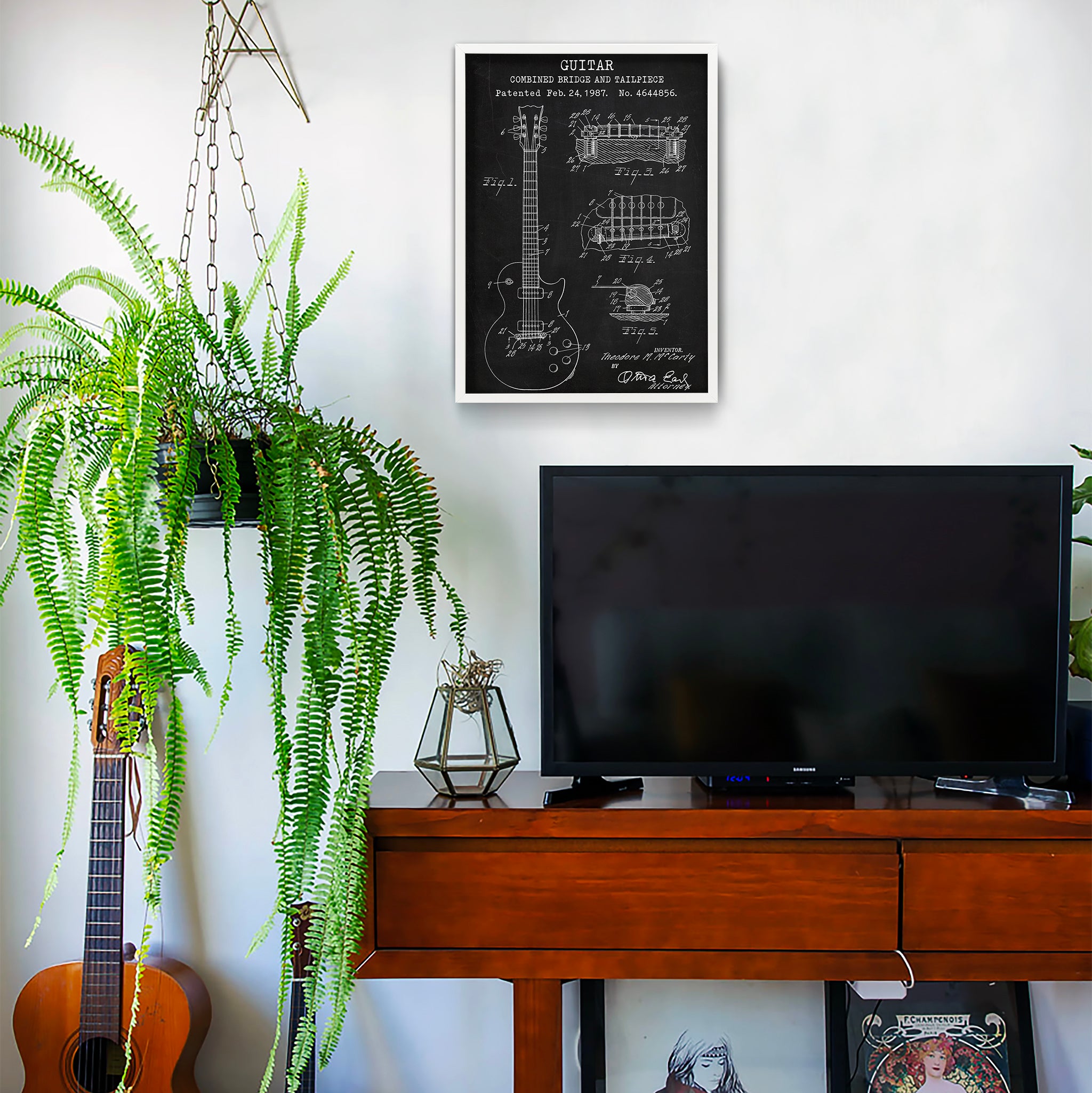



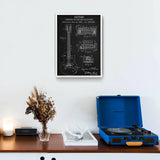


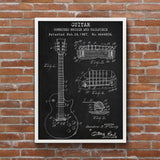
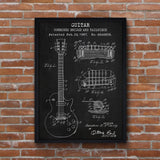
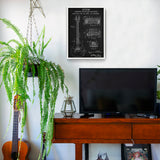
Gibson Les Paul Guitar Chalkboard Poster
🌞 SUMMER CAMPAIGN! 25% OFF THE SECOND ITEM IN YOUR CART ON ALL PRODUCTS.
When we think of the solid-body electric guitar explosion, we inevitably think of the early-to-mid 1950s. But Les Paul’s story goes back even further. In 1945, Les Paul, already a respected guitar innovator, presented Gibson with the idea for a solid-body Spanish guitar.
A block of pine wood ran through the center of the instrument – slightly deeper and wider than the neck – and hollow sides, or “wings” were added to give it shape. Les dubbed his prototype “The Log” – not exactly an awe-inspiring name, but perfectly fitting for what was essentially a bolted-together pine plank.
Although Les recognised that the future of electric guitar manufacturing was solid-bodies, Gibson initially did not share his enthusiasm. They mocked the concept and rejected the prototype.
By 1951, however, the guitar market was a very different place. Fender’s newly-named “Telecaster” was causing a small storm in the guitar-playing world, proving that Les Paul’s solid-body vision wasn’t as out there as Gibson had initially thought. Unsurprisingly, in the same year, Ted McCarty and his team began working on what would eventually become the Les Paul model.
Gibson wanted a well-made, expensive instrument that lived up to their reputation as a high-end instrument manufacturer – a clone of the Tele it was not. In late 1951, they approached Les Paul with a prototype of their new instrument and an inquiry; they wanted to print Les’ name on the headstock to boost sales.
That original guitar bore many of the features we now associate with the Les Paul; its distinctive shape, mahogany body, and the iconic “Gold Top” color scheme (chosen to reflect the guitar’s status as a high-end instrument). However, there were some differences too. The pickups were P90s, and the trapezoid tailpiece resembled those used on Gibson’s hollow-bodies of the time.
On the 1952 models, the tailpiece was actually applied incorrectly, much to Les Paul’s chagrin. The strings were wrapped underneath rather than over as they should have been. This made right-hand string damping impossible.
The following year, after Les Paul’s protests, the tailpiece was corrected. While this greatly improved the playing experience, intonation problems persisted. Consequently, Gibson abandoned the trapezoid altogether in 1954, and the now-iconic tune-o-matic bridge was born.
The story of the classic sunburst Les Paul could have ended here, were it not for the impact of a guitar legend. In 1964, Keith Richards bought his 1959 Sunburst instrument, becoming the first guitarist to use this instrument on the British scene. His peers followed suit. Eric Clapton switched to a Les Paul in 1965, inspired by Freddie King. By the late 1960s, Peter Green, Jeff Beck, and Jimmy Page were taking responsibility for the Les Paul’s resurgence.
The most popular guitar model and arguably the most popular electric guitar in the world at the time was a model that was no longer in production. In response to increasing pressure from the guitar-playing public, Gibson re-released the Les Paul in 1968 - its legendary status finally confirmed. It has remained in production ever since.
This frame has soft lines, is tested and approved for nurseries, and is available in many sizes. The plastic front protection is safe and gives the print a good appearance.
Features
You can easily hang the frame with nails or screws and decorate your walls with pictures.
It can be hung horizontally or vertically to fit the available space.
Plastic front protection makes the frame safer to use.
What's in the box?
1 framed print
Frame: Particleboard, Paper foil
Front protection: Polystyrene
Print: Ultra Premium Photo Paper
Packaging
The painting is carefully wrapped with air bubble nylon. It is stylishly covered with wrapping paper and tied with jute string. After elegant and gift-suitable packaging, it is ready to be shipped in a cargo bag.